


Cadmium element (Cd): cadmium periodic table facts
Cadmium periodic table facts: cadmium (Cd) is element 48, a transition metal in group 12, period 5. Pick up a rechargeable drill battery, an orange artist's paint or a solar panel from the desert, and you may be holding cadmium (Cd), element 48. To see how electron capture in potassium-40 builds the radiogenic isotope, check element 18, argon for details and examples.
It is a soft, bluish-white heavy metal that sits directly below zinc and above mercury, and its story runs from a pharmacy puzzle in 1817 to nuclear reactors. Here you get its key data, how it behaves in chemistry, where it is used and why it is treated as one of the most closely regulated toxic metals.
Rotate the 3D Bohr model of cadmium
Drag to orbit, scroll to zoom.
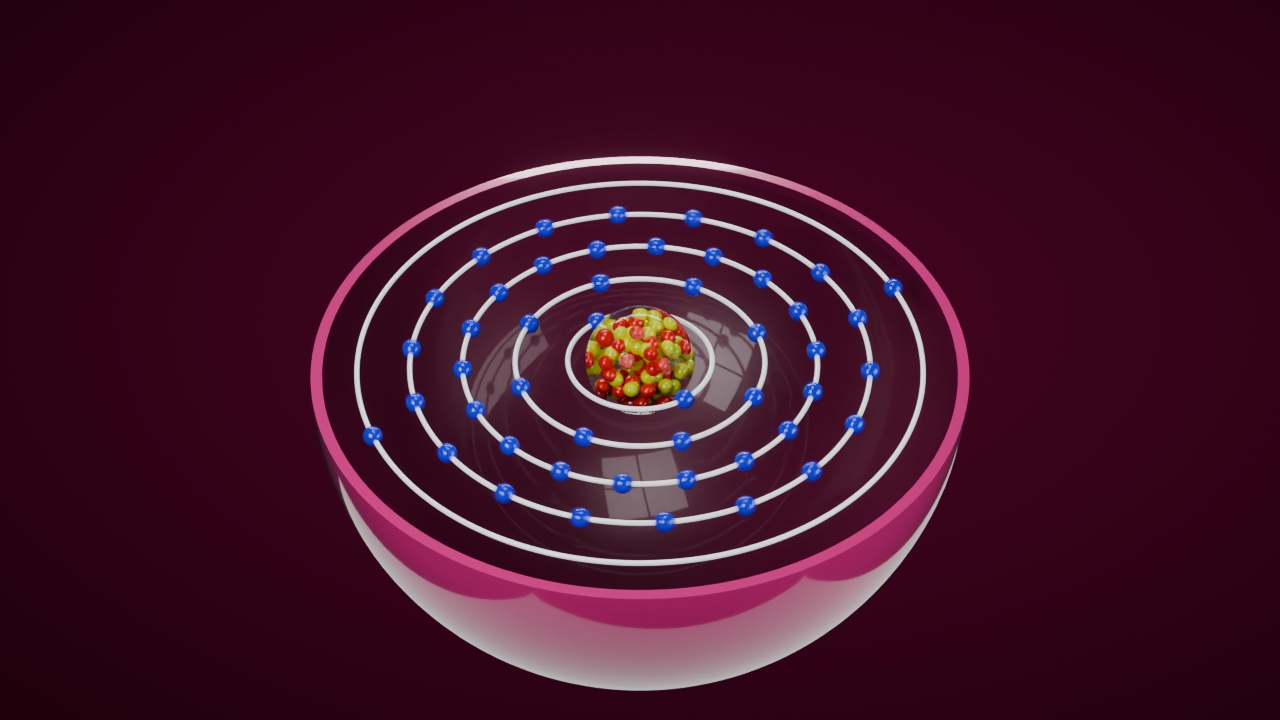
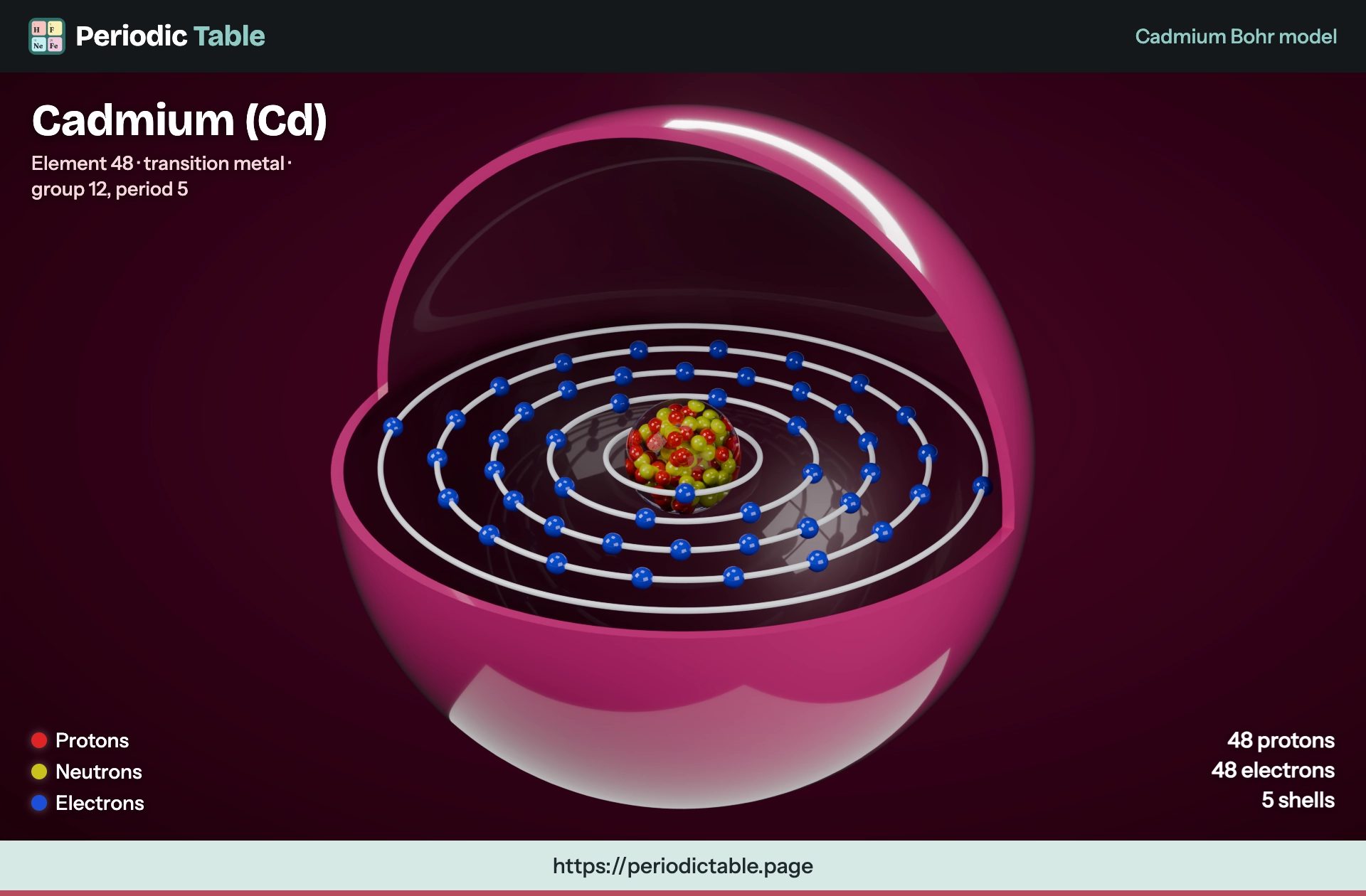
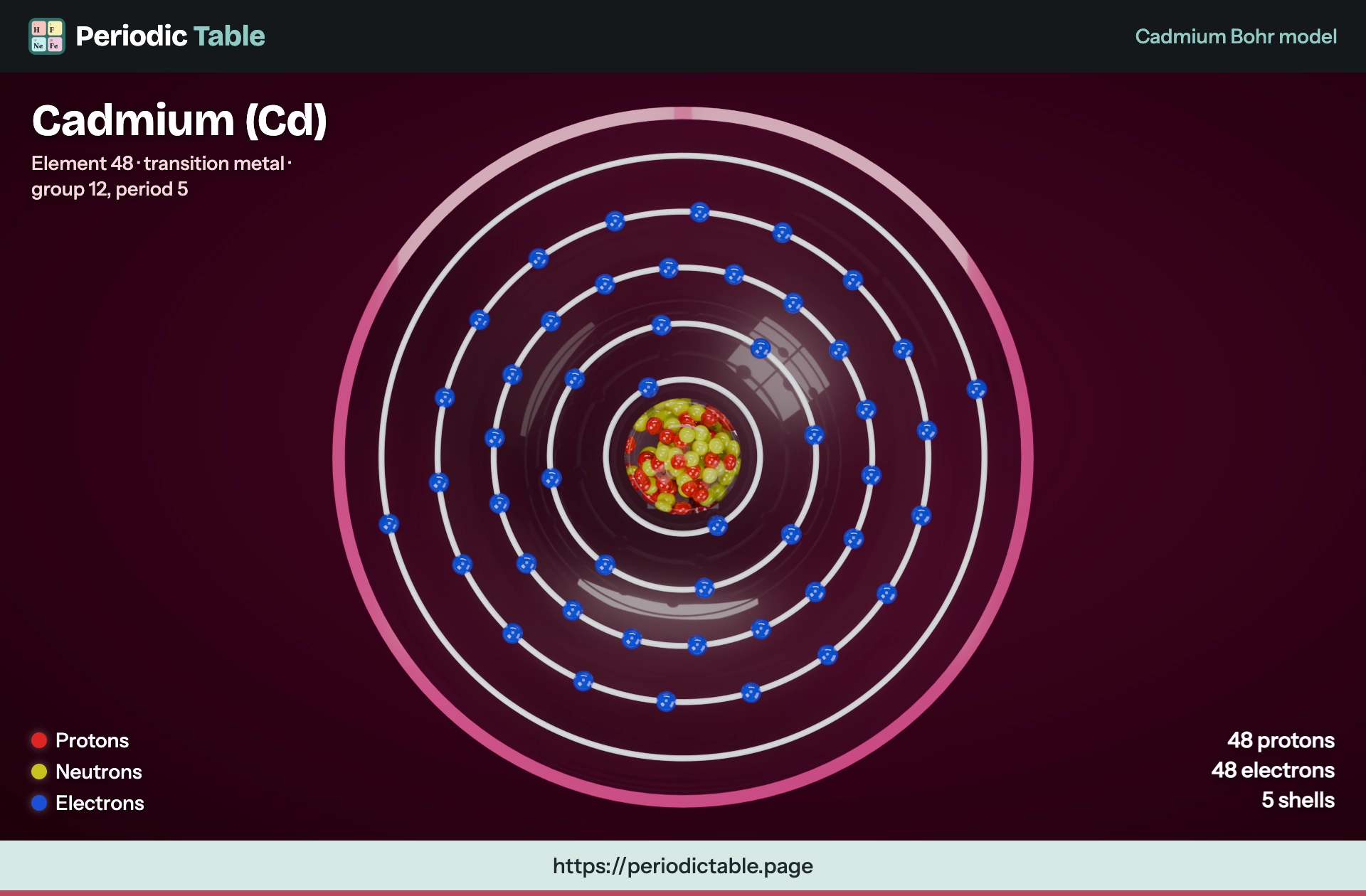
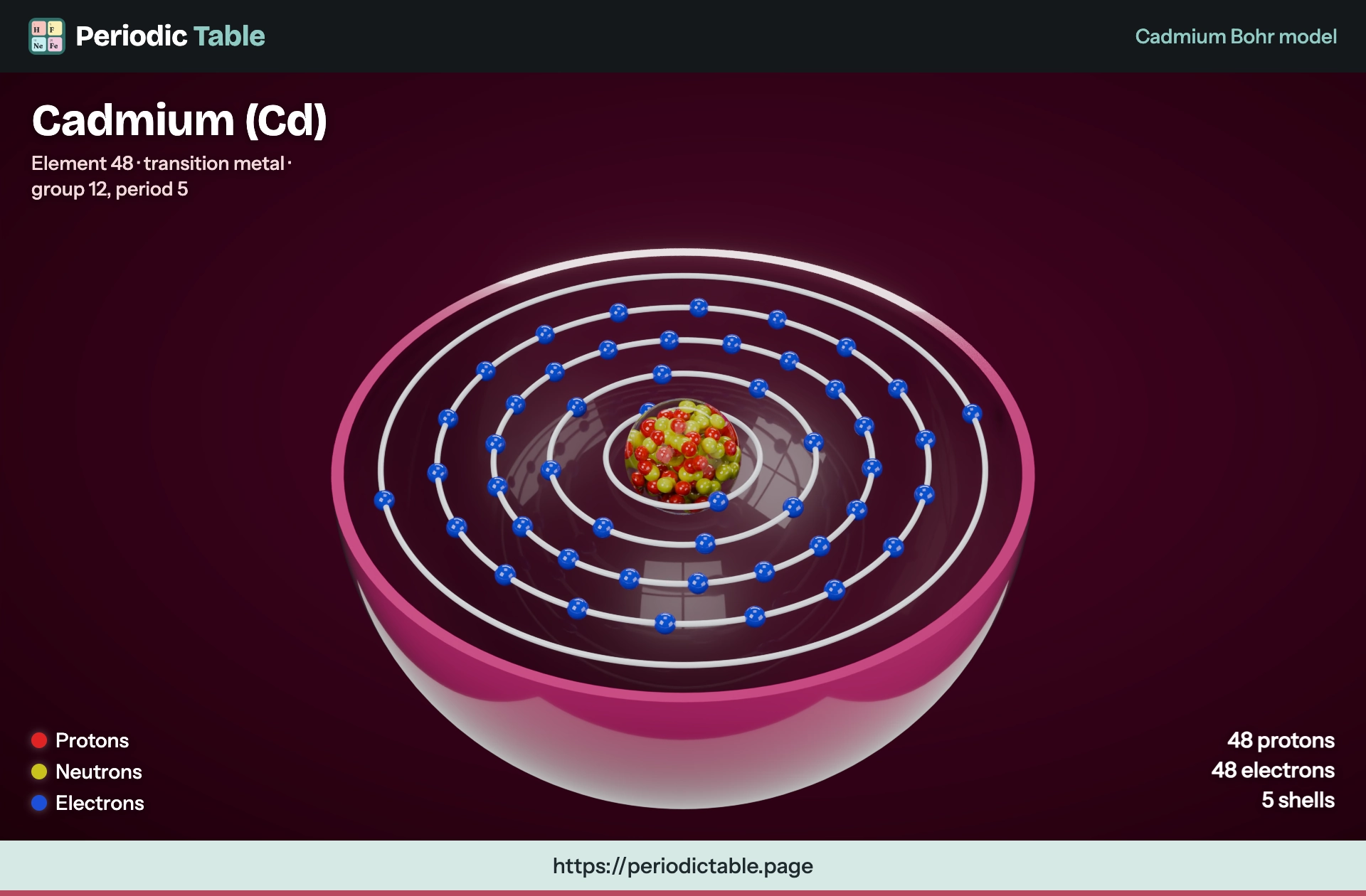
This is a Bohr model of cadmium (Cd), a simplified picture of a single cadmium atom. Its nucleus holds 48 protons, and a neutral cadmium atom has 48 electrons, arranged around it in 5 shells (2 in shell K, 8 in shell L, 18 in shell M, 18 in shell N and 2 in shell O).
Cadmium periodic table electron configuration
- Shorthand
- [Kr] 4d10 5s2
- Full
- 1s2 2s2 2p6 3s2 3p6 4s2 3d10 4p6 5s2 4d10
- Electrons per shell
- 2, 8, 18, 18, 2
Cadmium element properties and atomic data
- Atomic number
- 48
- Atomic mass
- 112.4144 u
- Phase at STP
- Solid
- Melting point
- 321.07°C (594.22 K)
- Boiling point
- 766.85°C (1040 K)
- Density
- 8.65 g/cm³
- Electronegativity (Pauling)
- 1.69
- Period
- 5
- Group
- 12
- Block
- d-block
- Appearance
- Silvery bluish-gray metallic
- Discovery date
- 1817
- Discovered by
- Karl Samuel Leberecht Hermann
- Named by
- Isotopes of cadmium
Cadmium atomic number, group 12 position and key data
As element 48, cadmium sits in the zinc column, period 5 of the periodic table, in the d-block between silver on its left and indium on its right. Its filled 4d subshell explains much of its chemistry: with every d orbital full, it gives up only its two outer 5s electrons. For mining and supply questions, from tantalite ore to capacitor-grade powder, see the tantalum periodic table for clear answers.
| Property | Value |
|---|---|
| Symbol | Cd |
| Atomic number | 48 |
| Standard atomic weight | 112.414 |
| Group, period, block | Group 12, period 5, d-block |
| Electron configuration | [Kr] 4d10 5s2 |
| Melting point | 321.07 °C (594.22 K) |
| Boiling point | 767 °C (1040 K) |
| Density at 20 °C | 8.65 g/cm3 |
| Electronegativity (Pauling) | 1.69 |
| Ionization energies (1st, 2nd, 3rd) | 867.8, 1631.4, 3616 kJ/mol |
| Crystal structure | Hexagonal close-packed |
| Magnetic ordering | Diamagnetic |
| State at room temperature | Solid |
Two numbers stand out when you compare it with its neighbours. The melting point of about 321 °C is far lower than that of most of its neighbours, and the jump from the second to the third ionization energy is steep, which is why a +3 ion is never seen in ordinary compounds.
Physical and chemical properties of cadmium metal
Pure cadmium metal looks a lot like tin when freshly cut, but it is heavier and much softer. Its properties split neatly into how the bulk solid handles and how its atoms react. Samarium-cobalt magnets and their resistance to demagnetization feature in the samarium atomic mass, with notes on headphones and motors.
Physical properties: soft, silvery and malleable
Cadmium is a silvery-white metal with a faint blue tint, easy to cut with a knife. It is malleable and ductile, so it can be rolled into sheet or drawn into wire without cracking. A thin oxide film forms on its surface and protects it, which is why it weathers far better than iron.
As a solid block it is insoluble in water and does not catch fire, but powdered cadmium can burn and give off toxic fumes of brown cadmium oxide. That vapour, not the solid, are the main hazard in a workshop.
Chemical properties and the +2 oxidation state
In almost all of its compounds cadmium shows a single oxidation state of +2, forming the colourless Cd2+ ion. A rare +1 state exists in the Cd22+ pair ion, which mirrors the mercury(I) ion.
Because its d shell stays full in the element and in the ion, many chemists do not count it among the true transition metals, even though it sits in the middle block of the table. When heated, cadmium burns to an oxide, much as zinc burns to zinc oxide:
$$2\,\text{Cd} + \text{O}_2 \rightarrow 2\,\text{CdO}$$
Common acids dissolve it readily. Hydrochloric acid gives cadmium chloride, sulfuric acid gives cadmium sulfate and nitric acid gives cadmium nitrate, all three readily soluble. Most other cadmium compounds, such as the sulfide and the carbonate, are insoluble but can become more soluble in acidic conditions.
Cadmium isotopes and why they absorb neutrons
Natural cadmium is a mix of eight isotopes. Six are stable, or decay so slowly that no one has measured it, and two are weakly radioactive: Cd-113 undergoes beta decay with a half-life of about 8 × 10¹⁵ years, and Cd-116 decays by double beta emission even more slowly.
| Natural isotopes | Natural abundance (%) | Behaviour |
|---|---|---|
| Cd-106 | 1.25 | Effectively stable |
| Cd-108 | 0.89 | Effectively stable |
| Cd-110 | 12.49 | Stable |
| Cd-111 | 12.80 | Stable |
| Cd-112 | 24.13 | Stable |
| Cd-113 | 12.22 | Very slow decay (beta) |
| Cd-114 | 28.73 | Most abundant, effectively stable |
| Cd-116 | 7.49 | Very slow double beta emission |
Cd-113 is the one that matters in engineering. It captures slow (thermal) neutrons with an unusually large cross-section, and above an energy of roughly 0.5 eV it lets them pass. Physicists call this sharp edge the cadmium cut-off, and it is the reason a sheet of cadmium works as a sharp filter between slow and fast neutron energies in experiments.
History of cadmium as a chemical element
Cadmium was discovered in Germany in 1817 by Friedrich Stromeyer, a professor at Göttingen who also inspected pharmacies. Some batches of zinc oxide, then sold as a medicine, turned yellow when heated even though pure samples stayed white. Stromeyer traced the colour to an unknown impurity in the zinc carbonate the oxide had been made from, isolated a new metal from it and named it after cadmia, the Latin name for calamine.
The word goes back to the Greek kadmeia, and to Cadmus, the legendary founder of Thebes. Karl Hermann and others reached the same impurity at almost the same time, so credit is sometimes shared.
The metal stayed a curiosity for decades. Cadmium iodide even appeared in an early 1900s British pharmaceutical reference as a treatment for swollen joints, long before its toxicity was understood. Industrial production only took off in the 20th century.
How cadmium's red spectral line defined the meter
Every element emits light at its own exact wavelengths, and cadmium's red spectral line, at about 643.8 nanometres, is especially sharp. From 1907 it served as the reference for the international ångström, and in 1927 the length standard itself was tied to a count of its wavelengths.
In 1960 the definition moved to an orange line of krypton, and since 1983 the meter has been defined by the speed of light. Cadmium spectral lines are still used to calibrate instruments today.
Cadmium ore, zinc ores and how cadmium is produced
Cadmium is scarce. It makes up only about 0.1 to 0.2 parts per million of the Earth's crust, roughly the 65th most abundant element, and it almost never forms deposits of its own.
Its only important mineral, greenockite (CdS), turns up as a thin coating on sphalerite, the main ore of zinc. The two elements are so alike chemically that no geological process separates them, so nearly every zinc ore carries a small share of cadmium.
That is why cadmium is a byproduct of zinc production, with smaller amounts recovered from lead and copper refining. The route depends on how the main metal is made:
- Smelting route: the ore concentrate is roasted to an oxide and reduced with carbon, and the cadmium, being more volatile, is separated by vacuum distillation.
- Electrolysis route: the main metal is won from a sulfate solution by electrolysis, and the cadmium is precipitated out of that solution before it is plated out.
- Secondary sources: recycling of used nickel-cadmium cells and of dust from steelmaking scrap supplies a smaller share.
China is the largest producer, followed by South Korea and Japan. Because output follows zinc mining rather than cadmium demand, supply cannot simply be raised when prices rise.
Cadmium uses in industry and technology
Most uses of cadmium rely on three traits: it shields iron from rust, it makes vivid stable colours and it is a strong neutron absorber. Many of them are shrinking in industry as safer substitutes appear.
Nickel-cadmium batteries
For years, nickel-cadmium batteries (Ni-Cd) consumed the largest share of the world's cadmium. Each cell pairs a nickel hydroxide positive electrode with a cadmium negative electrode in an alkaline electrolyte and delivers a nominal 1.2 volts.
They are rugged and handle heavy current, which made them standard in power tools, emergency lighting and aircraft. Nickel-metal hydride and lithium-ion cells have replaced most of them in consumer batteries, and spent Ni-Cd packs must be collected rather than thrown away.
Electroplating steel against corrosion
Electroplating deposits a thin layer of cadmium onto steel fasteners and parts, giving a corrosion-resistant finish that also lubricates threads and survives salt spray. It is still specified in aerospace and military hardware. The drawback is hydrogen embrittlement: the plating process can force hydrogen into very high-strength parts, so those parts need special low-embrittlement baths or another coating method.
Control rods and the neutron poison effect
Because Cd-113 is such an efficient neutron absorber, cadmium acts as a neutron poison. In nuclear reactors, control rods containing it soak up neutrons that would otherwise trigger further nuclear fission, which lets operators slow or stop the chain reaction. A common rod alloy in pressurized water reactors is 80% silver, 15% indium and 5% cadmium.
Cadmium sulfide pigments, stabilizers and alloys
Painters prize cadmium pigments for colours that do not fade. Cadmium sulfide gives cadmium yellow, the most common yellow pigment of the group, while adding selenium produces orange shades and cadmium selenide gives cadmium red. These pigments colour oil and acrylic paints, ceramics, glass and plastics.
Other cadmium salts, such as the laurate and stearate, were long used as heat and light stabilizers in PVC, though barium- and calcium-based systems have now replaced them. In metallurgy, small additions go into bearing alloys, some types of solder and low-melting mixes such as Wood's metal.
Cadmium telluride, semiconductors and quantum dots
The fastest-growing use is in thin-film solar panels. Cadmium telluride is a semiconductor that absorbs sunlight efficiently in a very thin layer, which makes it one of the cheapest materials for large solar cells.
Cadmium selenide and sulfide nanocrystals act as quantum dots whose glow changes colour with particle size, used in some displays and in biological imaging. Cadmium compounds also appear in photodetectors, older television phosphors and helium-cadmium lasers, which give blue and ultraviolet light.
Does cadmium have a biological role?
For humans and other animals, cadmium is not a nutrient. The body has no use for it and treats it as a contaminant. The one known exception is in some marine diatoms: in surface seawater where zinc is scarce, these algae build a version of the enzyme carbonic anhydrase around cadmium instead of zinc.
In people, absorbed cadmium binds to a protein called metallothionein and collects mainly in the kidneys and the liver. It leaves the body extremely slowly, mostly through urine, giving it a biological half-life of several decades. That slow clearance is why small daily doses can build up over a lifetime.
Cadmium toxicity and health effects
Cadmium toxicity comes from its resemblance to zinc and calcium, which lets it slip into cells and disrupt them. The International Agency for Research on Cancer classifies cadmium and its compounds as carcinogenic to humans, with lung cancer the clearest link from workplace exposure, while possible links to prostate and breast cancer are still being studied.
Long-term buildup damages the kidneys first, causing kidney disease, a slow health effect that often goes unnoticed for years, and is also linked to weak bones, osteoporosis and cardiovascular problems. A single heavy inhalation of cadmium vapour can cause metal fume fever and fluid in the lungs, which can be fatal.
How cadmium exposure happens
Most cadmium exposure comes through ingestion or inhalation:
- Food: for people who don't smoke, diet supplies most intake, since rice, leafy vegetables, grains, shellfish, offal, cocoa and dark chocolate can all carry cadmium taken up from the ground.
- Tobacco smoking: the tobacco plant concentrates cadmium in its leaves, and each cigarette delivers some to the lungs, where absorption is far higher than in the gut. Smokers typically carry several times more cadmium in their blood than non-smokers.
- Occupational exposure: workers in smelting, battery making, plating, welding and pigment handling can breathe in cadmium dust or fumes, which is the most dangerous route.
Cadmium poisoning and Itai-Itai disease
The best-known case of mass cadmium poisoning is itai-itai disease in Toyama Prefecture, Japan. Waste from an upstream mine polluted the Jinzū River, farmers irrigated paddies from the river, and rice grown there absorbed the metal. From the early 20th century, local people, mostly older women, developed agonising pain as their bones softened and broke.
The name means roughly "it hurts, it hurts". Poor nutrition, especially low iron and calcium, made the damage worse, and the disease became one of the first officially recognised pollution illnesses in the country.
Cadmium in soil, water and air
Cadmium is a persistent environmental pollutant, released by ore processing, burning coal and waste, steelmaking and cement production. A big share also comes from phosphate fertilizers, because the rock they are made from naturally contains cadmium, so every application adds a little to farmland.
In acidic soil it becomes more mobile, and crops take it up more readily. Once in the environment it does not break down, and it is a toxic metal that builds up in animals and seafood over time.
Background levels are normally low, a few nanograms per cubic metre in air and well under a microgram per litre in rivers. Problems appear near smelters, old mines and fields with a long history of heavy fertilizer use, which is why monitoring the local environment is a public health priority in those areas.
Cadmium regulations, exposure limits and recalls
Because the harm to human health is well documented, cadmium is tightly controlled by regulation around the world. The limits below are the ones most often cited:
| Rule or agency | What it limits | Limit |
|---|---|---|
| OSHA (USA) | Permissible exposure limit in workplace atmosphere, 8-hour average | 5 µg/m3 |
| EPA (USA) | Maximum level in drinking water | 0.005 mg/L |
| EU RoHS directive | Content in electrical and electronic equipment | 0.01% by weight |
| EFSA (EU) | Tolerable weekly intake from food | 2.5 µg per kg body weight |
In Europe, REACH also restricts cadmium in plastics, paints, brazing fillers and jewelry. Even so, consumer products keep failing tests: regulators have repeatedly found cheap imported jewelry, especially children's charms, made largely of cadmium alloy, and some promotional drinking glasses were recalled because their painted designs contained it. If you handle cadmium-containing items, don't heat, sand or cut them, wash your hands afterwards, and recycle old batteries through a proper collection point.